

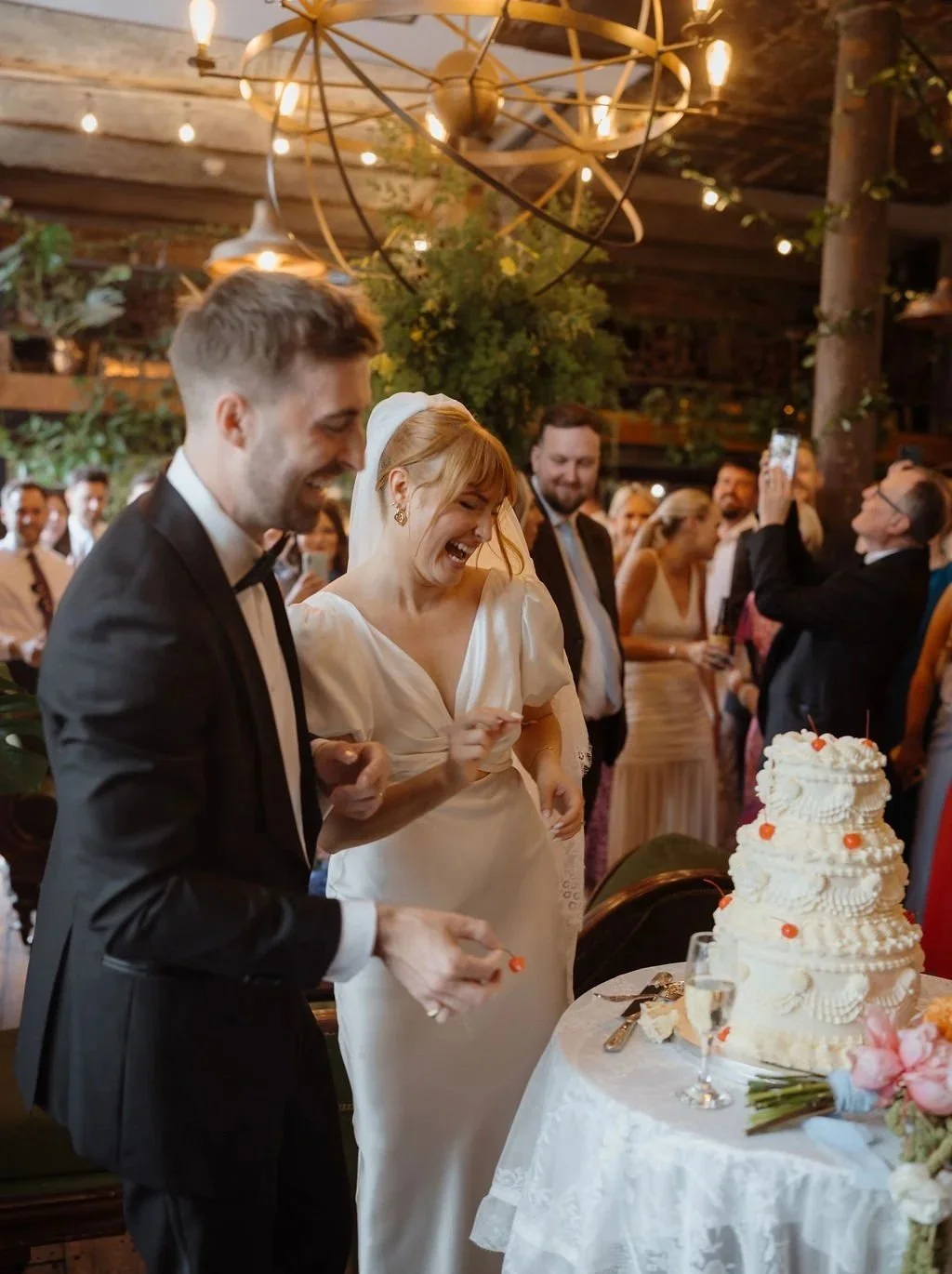
Winter weddings bring a particular set of considerations that couples planning a summer event rarely need to think about. Temperature is chief among them. A buttercream wedding cake is sensitive to heat — but it is equally sensitive to cold, and the transition between the two can cause problems that are entirely avoidable with the right preparation.
Winter cake care is not complicated, but it does require some forethought. Here is what couples need to know.
Temperature and the Buttercream Surface
Buttercream behaves differently at different temperatures. In a warm environment it softens; in a cold one it firms up and can develop surface condensation as it returns to room temperature. Neither extreme damages the cake itself, but both can affect the appearance of the finish — particularly a smooth Classic surface where any marks or moisture will show clearly.
The most important principle in winter cake care is avoiding rapid temperature changes. A cake that moves from a cold vehicle directly into a warm, heated venue needs time to acclimatise gradually.
Transport in Cold Conditions
Cold weather is generally more forgiving for cake transport than heat, but there are still considerations. A vehicle that has been parked in freezing temperatures will be very cold when the cake is loaded — and the journey, even a short one, in those conditions can chill the cake surface significantly.
If the cake is being transported by a third party rather than the bakery, the box should be kept level at all times and away from heating vents, which can create uneven warmth.
On the Day: Room Conditions
Most winter wedding venues are heated, but not always evenly. Areas near exterior doors, older stone buildings with cold spots, or marquees with variable heating can all affect the cake differently from the main reception area.
Where possible, the cake table should be positioned away from direct heat sources — radiators, open fires, and candle arrangements that generate significant warmth — as well as away from draughts from frequently used doors. A consistent, moderate ambient temperature is what the cake needs to look its best throughout the reception.
Serving and Storage
A buttercream wedding cake is best served at or slightly above room temperature. A cake that has been refrigerated before serving will have a firmer texture and a less expressive flavour — both improve as the cake warms slightly.
For couples who plan to save a tier following the celebration, wrapping individual slices tightly in cling film and then foil before freezing is the most reliable approach. Buttercream cakes freeze well when properly wrapped and will keep for several weeks without significant deterioration in quality.
Floral Elements
For cakes decorated with fresh flowers placed at presentation, winter weddings require particular attention to the condition of the flowers. Cold temperatures can affect certain blooms — particularly more delicate varieties — so it is worth confirming with your florist that the flowers chosen for the cake will hold well in the conditions on the day.
Edible pressed flowers and gold leaf — both used in Em Cakes’ wedding cake designs — are unaffected by temperature and require no additional consideration.
For couples exploring the full range of Em Cakes wedding cake styles and decoration options, our guide to tiered wedding cake styles is a useful starting point.