

Key Things To Know Before Ordering Your Wedding Cake
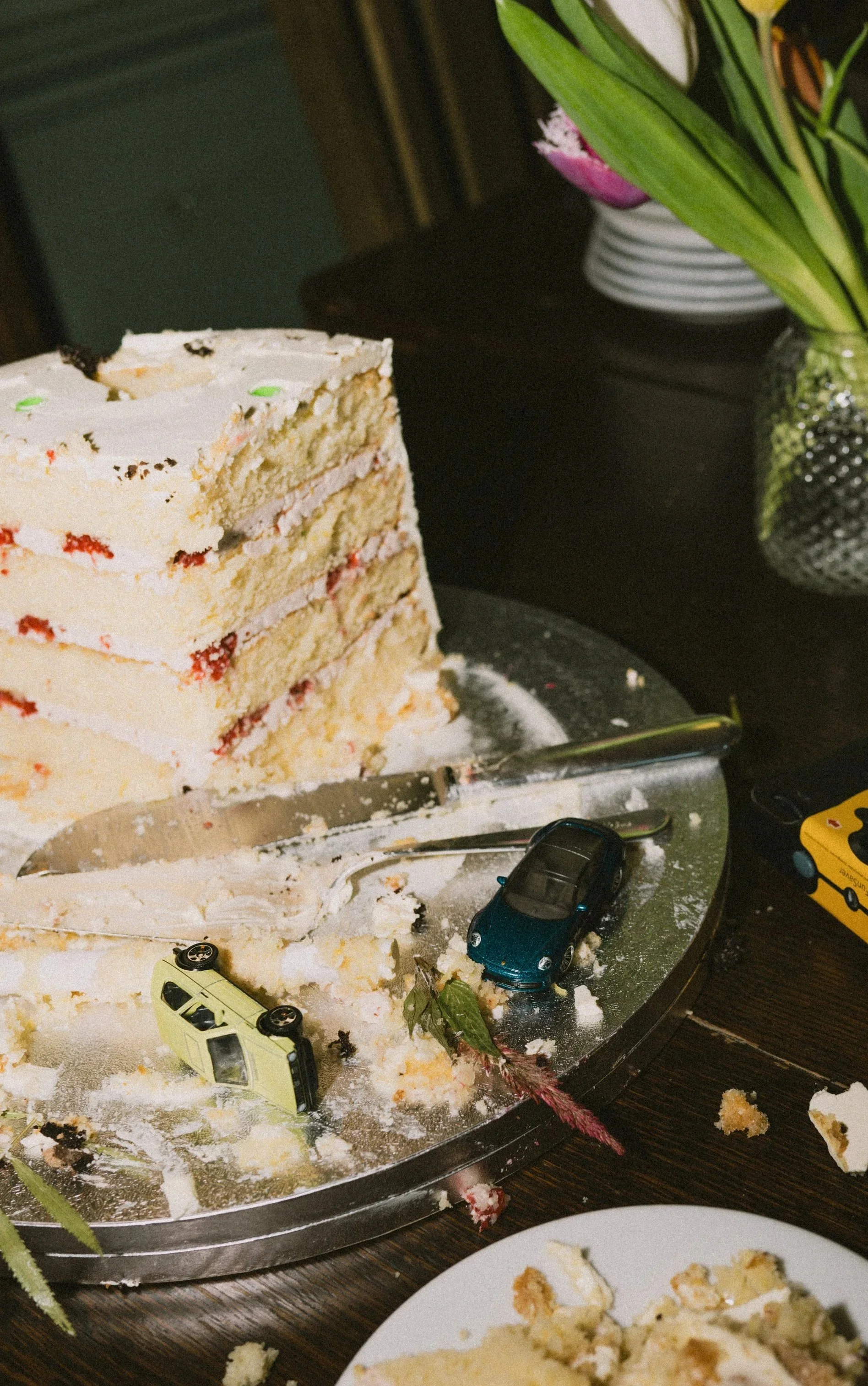
If you are in the early stages of planning your wedding cake, you probably have questions. A lot of them.
What flavour should you choose? How far in advance do you need to book? Does buttercream hold up on the day? How many portions do you actually need?
These are the questions we hear most often from couples planning their wedding cake in London. We have answered them all here — clearly, honestly, and without the fluff.
What is the difference between buttercream and fondant?
This is the question that comes up more than any other, and it is worth giving a proper answer.
Buttercream is a soft, creamy frosting made from butter and sugar. It is applied by hand, which means it can be finished in a variety of ways — from a smooth, near-matte surface to textured palette knife strokes or soft peaks. It tastes good, looks beautiful in photographs, and performs well across a wide range of temperatures.
Fondant is a rolled sugar paste that is stretched over the cake to create a very smooth, even surface. It gives a more sculpted finish and is commonly used when a very sharp edge or a heavily decorated surface is required. The trade-off is flavour — fondant has a noticeably sweeter, less nuanced taste than buttercream.
At Em Cakes, we work primarily in buttercream. Fondant is used rarely, and only for certain decorative elements. For couples who want texture, depth of colour, and a cake that tastes as good as it looks, buttercream is the right choice.
How far in advance should I book my wedding cake?
As early as you reasonably can. For most London weddings, booking four to six months ahead is sensible — and for popular dates in peak season, even earlier.
Wedding bakers work to a fixed capacity. Once a date is taken, it is taken. Leaving your cake until the final few months is a risk, particularly if you have a specific baker or style in mind.
If your wedding is some way off, use the time well. Look at styles, think about your colour palette, and consider ordering a tasting box to explore flavour options before you commit.
How do I choose the right flavour for my wedding cake?
Start with what you and your partner actually enjoy. A wedding cake is not purely decorative — it is served to your guests, and it should taste genuinely good.
Beyond personal preference, there are a few things worth thinking about. Rich, warming flavours tend to suit winter and autumn weddings. Lighter, fruit-forward options can feel more appropriate for spring and summer celebrations. If you are serving the cake as a dessert, consider how it will follow the meal you have planned.
At Em Cakes, the available flavours include Vanilla Strawberry Jam, Chocolate Ganache, Strawberry and Cream, Vanilla White Chocolate Raspberry, Red Velvet Cream Cheese, Coconut Passion Fruit, Lemon Raspberry, and Pistachio Raspberry. Different tiers of a cake can be made in different flavours, giving your guests some variety.
The best way to explore your options before committing is to order a tasting box.
What is a tasting box — and do I need one?
A tasting box is a selection of cake flavours in miniature, sent out so you can try before you decide. At Em Cakes, tasting boxes are available to order and require a minimum of five working days' notice.
You do not necessarily need to order a tasting box — but most couples find it genuinely useful. Choosing a flavour from a description is very different from tasting it. A tasting box removes the guesswork and means you go into your order confident in your choice.
How many tiers does a wedding cake need?
There is no rule. The number of tiers is determined by the number of portions you need, the visual impact you want, and the proportions that will look right in your venue.
A two-tier cake can be entirely appropriate for a smaller, more intimate gathering. A three-tier cake tends to suit mid-sized weddings and gives a classic, balanced look. Additional tiers beyond that are usually driven by guest numbers or a specific desire for height and drama.
The important thing is to work out your portion requirements first, and then let the tier configuration follow from that.
How many portions does a wedding cake serve?
This depends on how the cake is served and how it is cut.
As a general guide, a cake served as a dessert needs larger portions than one served as an additional sweet at a drinks reception. If you are relying on your cake as the primary dessert for your guests, size up rather than down.
Your baker should be able to advise on the right tier and size combination for your guest count. Be upfront about your numbers and how you plan to serve the cake, and you will get a more accurate recommendation.
What buttercream finishes are available for a wedding cake?
Buttercream is one of the most versatile finishes available for a wedding cake, and the style of application changes the whole character of the cake.
The most popular finishes include:
A smooth matte finish — clean, precise edges with a velvety surface. This style suits couples who want something elegant and understated. It works beautifully in both pale and deep tonal palettes.
A palette knife textured finish — organic, sweeping strokes that catch the light and create a painterly, movement-led surface. One of the most requested finishes for winter weddings in particular, as it performs beautifully in candlelight.
A soft peak or swooped finish — hand-applied peaks and curves that give the cake a looser, more romantic quality. Well-suited to intimate celebrations and outdoor or garden weddings.
Each finish creates a different mood, and the right choice depends on your venue, your overall aesthetic, and the colour or tone you have chosen.
Can I have different colours on different tiers?
Yes. Multi-tonal cakes — where tiers are finished in different shades within the same palette — are a popular choice and can look very striking when executed well.
The key is to think about the overall palette as a whole rather than choosing colours for individual tiers in isolation. Tones that work together and share a consistent warmth or undertone will read as a considered design. Tones that clash or compete can make the cake feel busy.
If you are considering a multi-tonal approach, bring your full palette — florals, linen, stationery — to any conversation with your baker.
Does buttercream hold up on the day?
Yes, when stored and displayed correctly.
Buttercream is sensitive to heat, which means it is not well-suited to outdoor summer weddings in direct sunlight or unventilated marquees in warm weather. In most indoor venue conditions — including candlelit winter venues — it performs very well.
If you have any concerns about your venue conditions, raise them with your baker early. A good baker will be upfront about what is and is not advisable, and will help you plan accordingly.
How is the cake delivered?
At Em Cakes, we deliver directly to your venue. All cakes are designed to arrive ready to display.
Delivery is available Tuesday to Saturday across London postcodes. If you have specific timing requirements or your venue has particular access arrangements, it is worth raising these when you place your order.
How do I know which baker is right for me?
A few things are worth looking for. A clear, consistent portfolio — so you can see the style of work the baker produces. Transparency about what they offer and what they do not. And a process that gives you a chance to try the product before you commit, whether through a tasting box or a tasting session.
Beyond that, trust your instincts. The baker you choose will be responsible for one of the most visible elements of your wedding day. Choose someone whose work you genuinely love and whose process gives you confidence.
If you are based in London and you are drawn to buttercream cakes with a clean, handcrafted finish, we would love to hear from you.