

Winter weddings have a visual language of their own. The light is different, the setting is often more intimate, and the colour palette tends toward richness and depth rather than the brightness of a summer celebration. A wedding cake designed with the season in mind will feel like a natural part of the day — one that belongs in the photographs rather than competing with them.
These winter wedding cake ideas cover the styles, finishes and design choices that work best in a cold-season setting, along with the practical considerations that couples planning a winter wedding tend to overlook.
Colour Palettes That Work in Winter
The most successful winter wedding cakes share one characteristic: the colours are chosen in relation to the venue and the light, not just the season.
Deep jewel tones — navy, forest green, burgundy, plum — read with warmth and presence in candlelit or low-light settings. A deep navy buttercream with gold leaf detail is one of the most photographed combinations in winter wedding cake design, and with good reason: it holds up in low light in a way that pale, matte finishes do not.
Ivory and champagne offer a softer alternative. Against a winter venue — exposed brick, dark wood, candlelight — a warm ivory cake with gold or pearl detail feels appropriately celebratory without being stark. It is a palette that suits formal and informal settings equally well.
White and silver are frequently requested for winter and work best when paired with textural contrast — a Textured or Semi Naked finish rather than a flat smooth surface — so the cake has visual interest beyond the colour alone.
Buttercream Finishes for Winter Weddings
The finish of a wedding cake shapes how it looks in the room and how it photographs. Winter settings tend to suit certain finishes more than others.
Classic — a smooth, flat buttercream surface — works well in formal settings and provides a clean base for gold leaf, pearls or hand-painted elements. For a winter wedding with a refined aesthetic, Classic is often the right starting point.
Textured finishes — palette knife marks, organic swoops, deliberate imperfections — add warmth and handmade character to a cake. In a winter setting, particularly one with natural materials and soft lighting, a textured finish reads beautifully without requiring additional decoration.
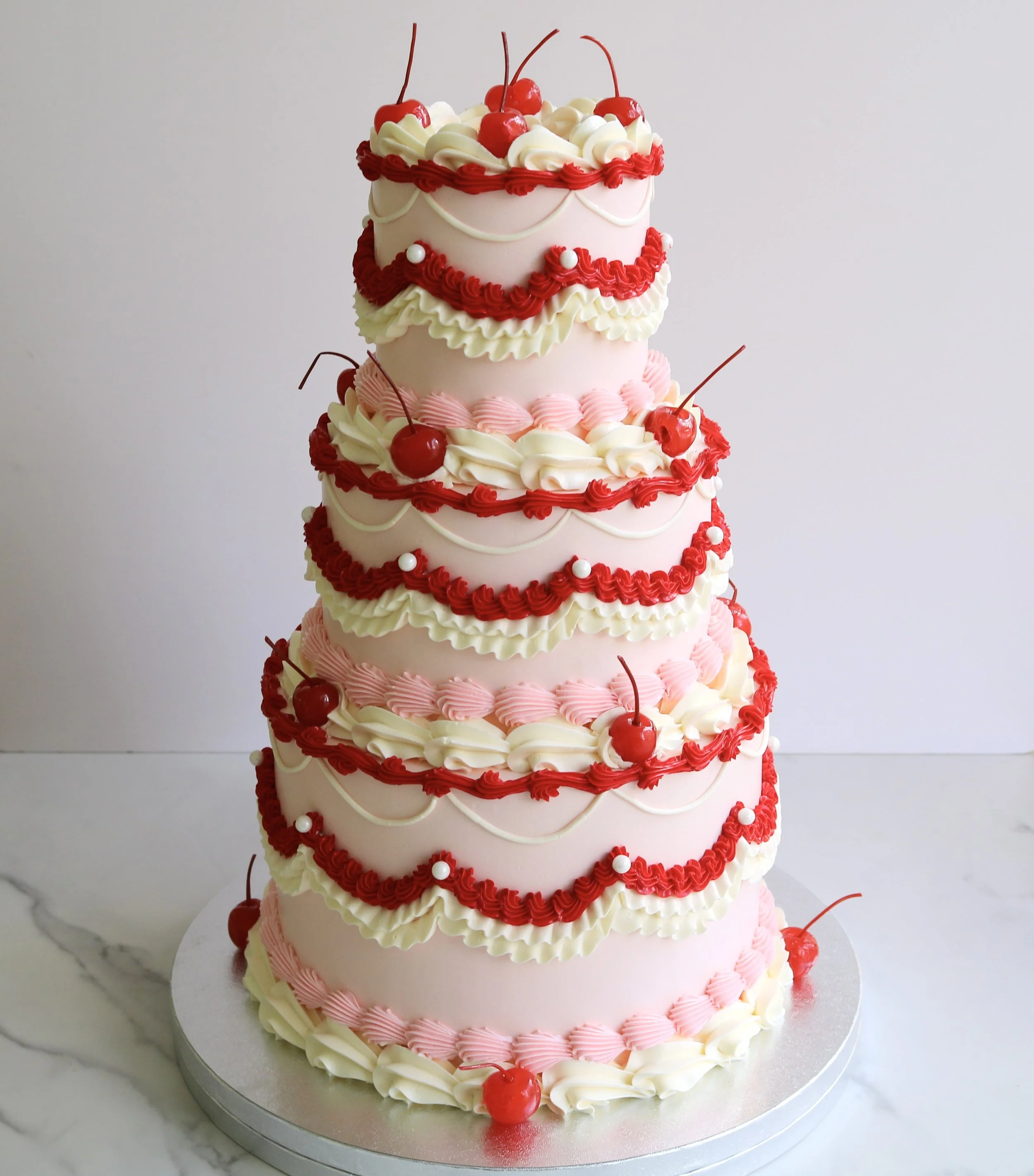
Vintage/Lambeth — characterised by intricate raised piping and scrollwork — suits formal winter receptions well. The detail and craftsmanship feel appropriate to an occasion with a sense of ceremony, and the design holds its structure regardless of season.
Semi Naked finishes, where the sponge is partially visible through a thin layer of buttercream, work in relaxed or rustic winter settings — a barn or country house venue, for example — but can look underdressed in a more formal room. Worth considering the venue before committing.
Floral designs using dried botanicals, pressed flowers or winter foliage — eucalyptus, rosemary, dark berry stems — bring a seasonal quality to the cake without relying on colour alone. A pale buttercream cake dressed with considered winter botanicals is one of the more distinctive choices available.
Decoration: What Works in Winter
Edible gold leaf is the most versatile winter wedding cake decoration. It catches light at any intensity, works across all colour palettes, and adds a sense of occasion without overwhelming the design. A light, considered application to one or two tiers tends to be more effective than full coverage.
Pearls — whether piped, applied, or scattered — complement gold leaf naturally and work across finishes from Classic to Vintage. They add detail and texture without colour, which makes them useful for cakes where the palette is already doing significant work.
Fresh flowers and berries bring colour and life to a winter cake. Dark berries — blackcurrant, blackberry — work particularly well against ivory or cream buttercream. Fresh white blooms suit paler palettes. If using fresh flowers, confirm with your baker that the chosen varieties are food-safe and suitable for direct contact with buttercream.
Edible pressed flowers offer a more controlled alternative to fresh flowers. The colour is preserved and the placement is precise — useful for couples who want a botanical element without the variability of fresh stems.
Tiers and Scale
Winter weddings often have a more intimate guest list than peak-season celebrations, which can affect the tier count. A two-tier cake suits most winter receptions well — it has presence without being disproportionate in a smaller room.
For larger winter celebrations — a full reception in a formal venue — a three-tier design with variation between tiers (different finishes, different decoration, or a colour shift between levels) creates visual interest and provides flexibility on flavours for a varied guest list.
Em Cakes offers one, two and three tier wedding cakes as standard, with four and five tier options available on request for larger receptions.
Flavour Choices for Winter
Winter guests often lean toward richer, warmer flavours than those requested in summer. Vanilla with a fruit preserve — lemon curd, raspberry — remains a crowd-pleasing option. Chocolate ganache suits couples who want depth of flavour. For something more distinctive, salted caramel or a chocolate hazelnut filling both work well in a winter context without being divisive across a mixed guest list.
Couples uncertain about flavour choices before committing to a full order can arrange a tasting box — a practical step that removes one significant variable from the planning process.
Ordering Timeline for a Winter Wedding
Winter wedding cakes — particularly those planned for December and January — require earlier ordering than couples often expect. November and December are among the busiest months for London bakeries. Placing an order six to eight weeks before the wedding date is advisable, and for December weddings in particular, early November is the recommended window.
A full wedding cake consultation, flavour selection and design sign-off takes time on both sides. Getting in touch early gives couples the most flexibility on design options, tier count and collection or delivery date.
For couples planning a winter wedding, the Em Cakes wedding cake guide covers the full process from first enquiry to collection day.