

Wedding Cake Mistakes to Avoid: A Practical Guide for Couples
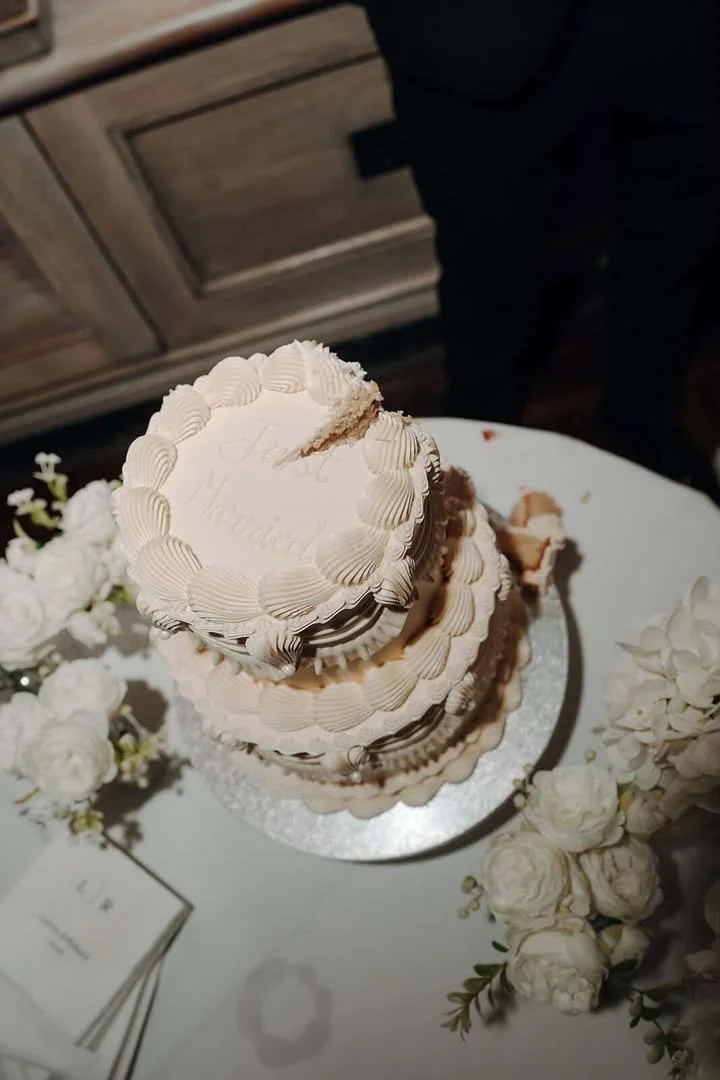
The wedding cake is one of those things that feels simple until you are actually in the middle of choosing one. There are more decisions involved than most couples expect, and a few of them are easy to get wrong without realising it until later. Here are the most common mistakes worth knowing about before you start.
Leaving it too late to start looking
This one comes up more than any other. Wedding cakes, particularly bespoke or made-to-order designs, need more lead time than most couples initially assume. Availability at good studios fills up well in advance of the date, especially during busy seasons.
Starting your search earlier than feels necessary is almost always the right call. It gives you time to look properly, compare options without pressure, and make a decision you are genuinely happy with rather than one made in a hurry.
Choosing a design before knowing the room
A cake that looks beautiful in isolation can feel disconnected in the actual venue. The lighting, the table styling, the flowers, the general palette of the room all affect how a cake reads on the day.
The most successful cakes are chosen with the full picture in mind, not in isolation on a Pinterest board. Before committing to a design, it is worth thinking about where the cake will sit, what will be around it, and what the light will be like at the time it is served.
Prioritising looks over taste
This is understandable. Wedding cake imagery is dominated by visual inspiration, and most of the decision-making happens through photographs. But the cake is also something your guests will eat, and often one of the more memorable parts of a wedding meal.
A cake that looks exactly as planned but tastes ordinary tends to be forgettable. A cake that tastes genuinely good tends to be talked about. Both matter, and the best outcome is obviously both together.
Assuming all buttercream is the same
Not all buttercream is created equal. There is a significant difference in taste, texture, and finish between traditional American buttercream, which is very sweet and quite dense, and Swiss meringue buttercream, which is lighter, silkier, and considerably less sweet. Italian meringue buttercream sits in similar territory to Swiss.
If you have had a buttercream cake before and found it too sweet or heavy, it is worth asking which type of buttercream a studio uses before writing the style off entirely.
Forgetting about the cutting and serving logistics
A cake needs to actually be served at some point, and this part often gets less thought than the design. How many portions do you need? Who is cutting and serving it? Is there a cake knife? Does the venue charge a cake-cutting fee?
These are practical questions that are easy to overlook in the excitement of choosing a design, and ones that are much easier to resolve early than on the day itself.
Trying to match the cake too precisely to the flowers
It sounds logical to match the cake to the floral arrangement exactly, but in practice this level of precision is difficult to achieve and often unnecessary. Buttercream colour is mixed by hand, and fresh flower availability varies.
A better approach is to match the overall tone and feeling rather than a specific shade or bloom. A cake that belongs in the same colour family as your flowers and shares a similar level of formality will read as intentional without requiring an exact match.
Overlooking portion sizes
Running out of cake at a wedding is genuinely embarrassing. Ordering too much is a waste. Getting the portion count right requires knowing both your guest number and how the cake will be served, since a dessert portion and a finger-food portion are different sizes.
Most cake studios will advise on this if you give them your guest count, but it is worth double-checking the assumptions behind any calculation, particularly if you have a tiered cake where the tiers are different sizes.
Choosing a style that does not suit the setting
A very formal, architectural cake can feel out of place at a relaxed garden party. A very loose, rustic design can feel underdressed at a formal ballroom wedding. Neither is wrong in itself, but the context matters.
The cake does not need to be a perfect replica of every other design choice at the wedding. It does need to feel like it belongs in the same world.