

Modern Wedding Cakes London: A Guide to Clean-Lined Buttercream Design
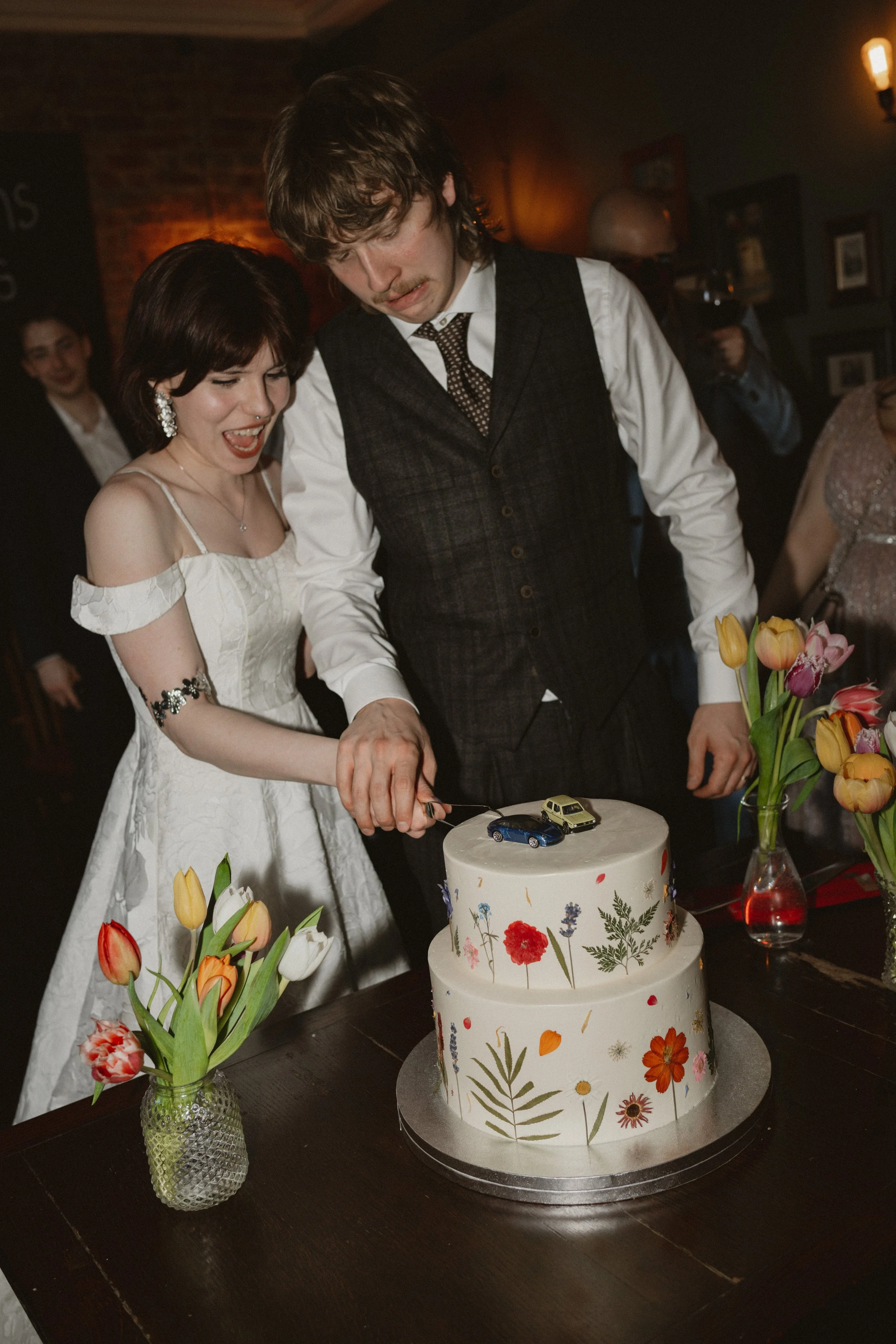
Ask ten couples what a modern wedding cake looks like and you will get ten different answers. Geometric tiers. Negative space. A single colour, used with restraint. What ties them together is not a specific shape so much as a way of thinking: less detail, more intention.
If you are planning a contemporary wedding and want your cake to feel like it belongs alongside the rest of your design choices rather than sitting apart from them, this guide will help you understand what the modern style actually means, and how it translates into buttercream.
What "modern" actually means for a wedding cake
Modern is often used loosely in wedding planning, so it is worth being specific. In cake design, it tends to mean three things working together.
Clean lines. Sharp, even edges rather than soft, rounded ones. Tiers that read as deliberate shapes rather than decorated surfaces.
Negative space. Restraint is doing the work here. A single line of texture, one cluster of detail, or one colour block against a plain field says more than full coverage ever could.
Tonal or monochrome colour. Rather than a palette of several competing shades, modern cakes tend to work within one colour family, varying only the depth and finish.
None of this requires fondant, despite what a lot of cake inspiration online seems to suggest.
Why buttercream suits the modern look particularly well
This might be the most counterintuitive part of the modern trend. A lot of the clean, sculptural cakes circulating on Pinterest and Instagram are fondant, simply because fondant holds a perfectly crisp edge.
Buttercream can do something fondant cannot: it can be perfectly smooth and still look handmade. There is a quiet warmth to a buttercream surface, even at its most minimal, that fondant's flawless plastic finish does not have. For a modern wedding that wants restraint without coldness, that distinction matters.
Every Em Cakes wedding cake is finished in Swiss meringue buttercream, never fondant, which is partly why this look comes up so often in what couples ask us for.
Three ways the modern look shows up in buttercream
Smooth and minimal. A single, unbroken buttercream surface in one tone, with no embellishment beyond perhaps one small, considered detail. Our Aspen design is a good example: a large two-tier cake finished with a scatter of edible pearls and almost nothing else, described as minimal yet timeless. That restraint is exactly the modern principle in practice.
Botanical minimalism. Modern does not have to mean bare. Our Hazel design shows how a smooth buttercream base can carry a small, considered amount of natural detail, in this case edible pressed flowers and foliage, without tipping into the fuller, more traditional floral look.
Semi-naked and pared back. A thinner layer of buttercream that lets the sponge show through slightly gives a cake a relaxed, almost architectural quality. Our Ingrid design uses this finish, and it is one of the more contemporary-feeling options in the range precisely because it resists looking overworked.
Choosing a modern colour palette
Stick to one family. White, ivory, soft taupe, and sage all work well as a modern single-tone base. The cake should feel like one continuous idea, not several decisions stitched together.
Let one element carry the contrast. If you want a moment of interest, give it to a single detail: one band of texture, one cluster of pearls, one fine gold line. Modern design tends to fail when there are two or three competing focal points instead of one.
Match the cake to your stationery, not your flowers. Modern weddings are often led by typography, materials, and structure rather than florals. If that describes your wedding, let your invitation suite or table styling guide the cake's tone rather than defaulting to whatever flowers you have chosen.
Is modern right for your wedding?
Modern suits weddings built around architecture, structure, and considered material choices. A clean industrial venue, a tailored dress, a minimal stationery suite. If your wedding already has a lot of visual texture, heavy florals, candlelight, layered table settings, a fully modern cake can sometimes feel like it is fighting the room rather than completing it. In that case, a hybrid approach, a modern shape with one softer, more textured detail, often works better than going fully minimal.
A few questions couples ask us about modern wedding cakes
Does minimalist mean plain?
Not in our experience. The best modern cakes are highly considered, not absent of detail. A flawless smooth finish takes more skill to achieve than a heavily decorated one, not less.
Can buttercream really hold a crisp, modern edge?
Yes, with the right technique. It will never have the glass-like finish of fondant, and that is generally the point: it reads as crafted rather than manufactured.
What if I want the modern look but I am nervous about it feeling too plain?
Start with one small detail rather than none. A single botanical accent, like the approach used on Hazel, gives you the modern silhouette without losing warmth.
If the clean, considered look feels right for your wedding, you can explore the full range of designs online, including Aspen, Hazel, and Ingrid, to see how the modern style comes together in practice.