

How to Display Your Celebration Cake: A Simple Guide for Home and Venue
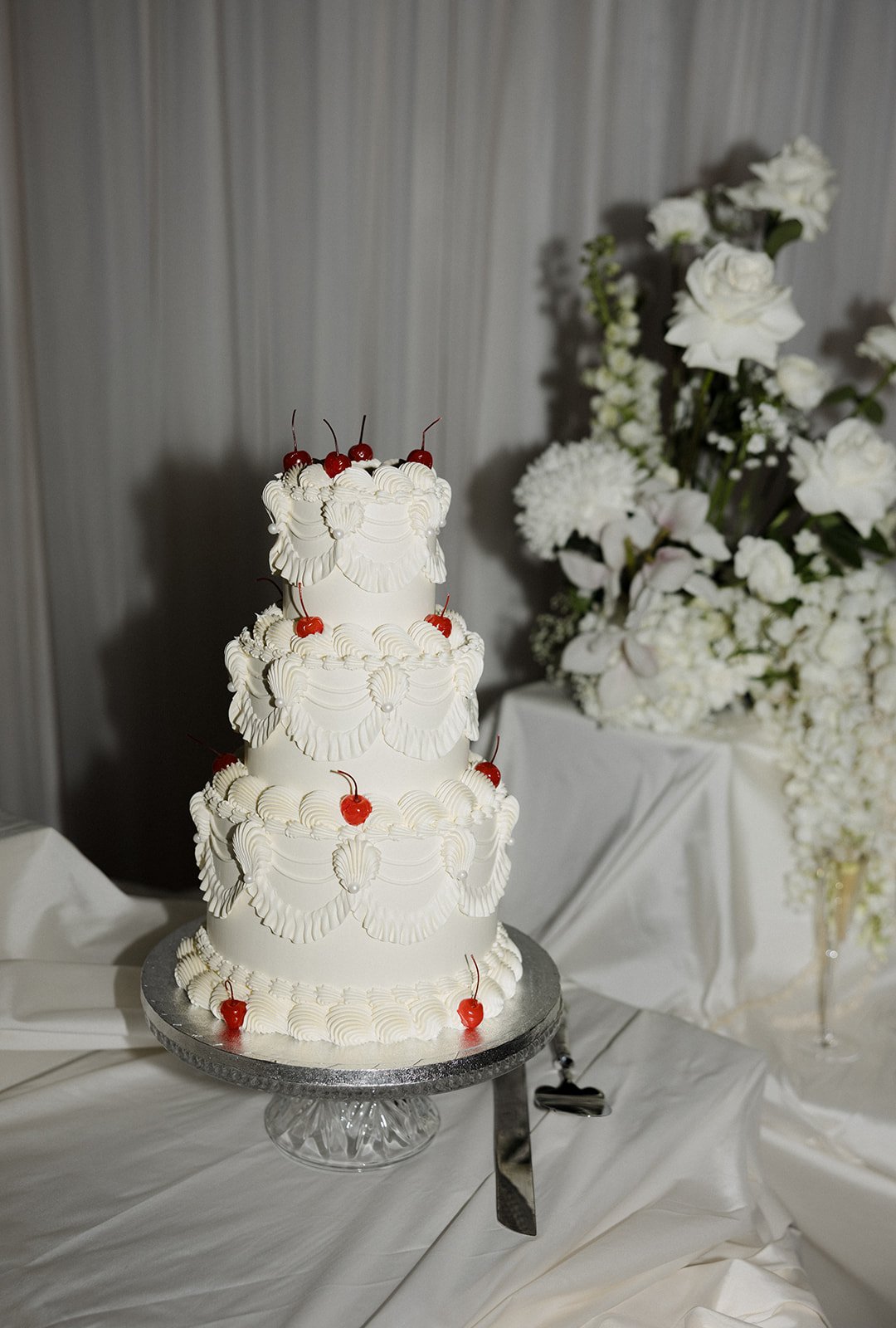
A well-made cake deserves a well-considered display. The difference between a cake that photographs beautifully and one that looks slightly lost on the table is usually less about the cake itself and more about the decisions made around it. Here is how to get it right without overcomplicating things.
Choose the right surface and height
The table the cake sits on matters more than people tend to think. A cake placed directly on a dining table at sitting height disappears in photographs and is easy to overlook in a room full of people. Raising the cake, even slightly, gives it presence.
A dedicated cake table, a side table, or a console table at standing height all work well. If you are using a dining table, a cake stand that adds height will do the same job. The goal is for the cake to be at a level where it is visible from across the room rather than requiring people to look down at it.
Use a cake stand or board that suits the design
A cake sitting on a plain board on a plain table tends to look unfinished. A stand or board that complements the cake without competing with it makes a real difference.
For a simple, minimal cake, a clean white or marble-effect stand reads well. For a more vintage or romantic design, a glass or gold stand tends to suit the aesthetic. For a children's cake with a bold, colourful theme, a simple white or wooden board keeps the focus on the cake rather than the surface beneath it.
The stand should be roughly the same diameter as the cake base or slightly larger. A stand that is too small looks unstable. One that is too large draws attention away from the cake.
Think about what surrounds the cake
A cake displayed completely in isolation can feel a little stark. A few considered elements around it, without overcrowding the table, help it feel like part of the celebration rather than a separate object.
Fresh flowers or greenery that echo the florals elsewhere in the room work well. A few candles at varying heights on either side add warmth, particularly for an evening celebration. For a children's party, a few balloons or themed decorations nearby tie the cake into the wider party styling.
The key word is few. Too many elements around the cake and it starts to compete rather than stand out.
Manage the light
Natural light is the most flattering for a celebration cake and almost always produces the best photographs. If the room has good natural light, position the cake to take advantage of it, ideally near a window but not in direct sunlight, which can soften buttercream and create harsh shadows in photographs.
For an evening celebration, warm artificial light works well. Cool white or fluorescent lighting tends to flatten buttercream colours and make them look less appealing than they are. If you have any control over the lighting in the room, warmer bulbs or candles nearby will always serve the cake better.
Keep temperature in mind
Buttercream is sensitive to heat. A cake displayed near a radiator, a heat source, or in a warm room for an extended period will begin to soften, and the finish will lose definition over time.
For home celebrations, keep the cake refrigerated until as close to serving time as is practical, then bring it out to display. For outdoor summer parties, shade is essential. A cake in direct sun will deteriorate quickly regardless of how well it was made.
Photograph it before the guests arrive
The cake will look its best before it has been surrounded by people, plates, and the general activity of a party. Taking photographs immediately after it is set up, before the celebration begins, almost always produces better results than trying to capture it mid-party.
Good natural or warm light, a clean background, and a straight-on or slightly elevated angle are all you need. You do not need a professional camera. A phone held steady at the right height in decent light will do the job well.
Cutting and serving
Use a sharp, long-bladed knife and wipe it clean between cuts. This keeps the slices looking neat and prevents crumbs from mixing across tiers or layers.
If the cake is tiered, start from the top tier downwards. If it is a single tier, score the portions before cutting to make sure they are even. Have a serving slice or spatula ready to lift portions cleanly onto plates rather than lifting them by hand.